
The Wellbeing Centre brings together a range of specialised outpatient services and activities for people in our communities. Our aim is to help give you and your carer the best possible quality of life by managing your symptoms, building your confidence and helping you take back control of your lives.
Referral for The Wellbeing Centre
For further information you can contact us on [email protected] or 0300 10 20 100 option 3
Whether you are referred by a healthcare professional or refer yourself, one of our team will contact you to discuss your needs and identify the part of the programme that best suits you and your carer.
You can access nursing, therapy, social and spiritual support from our team of staff and volunteers. You’ll also be able to spend time with other patients and carers who are going through similar experiences and enjoy activities both here at the Wellbeing Centre and online, including mindfulness, exercise and creative writing.

- Everyone treats you as a person, not a patient. The atmosphere is warm and friendly, and I feel comfortable sharing my concerns.
- Before coming to the Wellbeing Centre, I felt isolated and anxious. Now I have practical coping strategies and a supportive network of people around me
- My family and I have benefited greatly from the support offered. We feel heard, understood and better equipped to deal with the challenges we face
- The Centre has helped me focus on what I can do, rather than what I have lost

Complementary Therapy Videos 🎞️
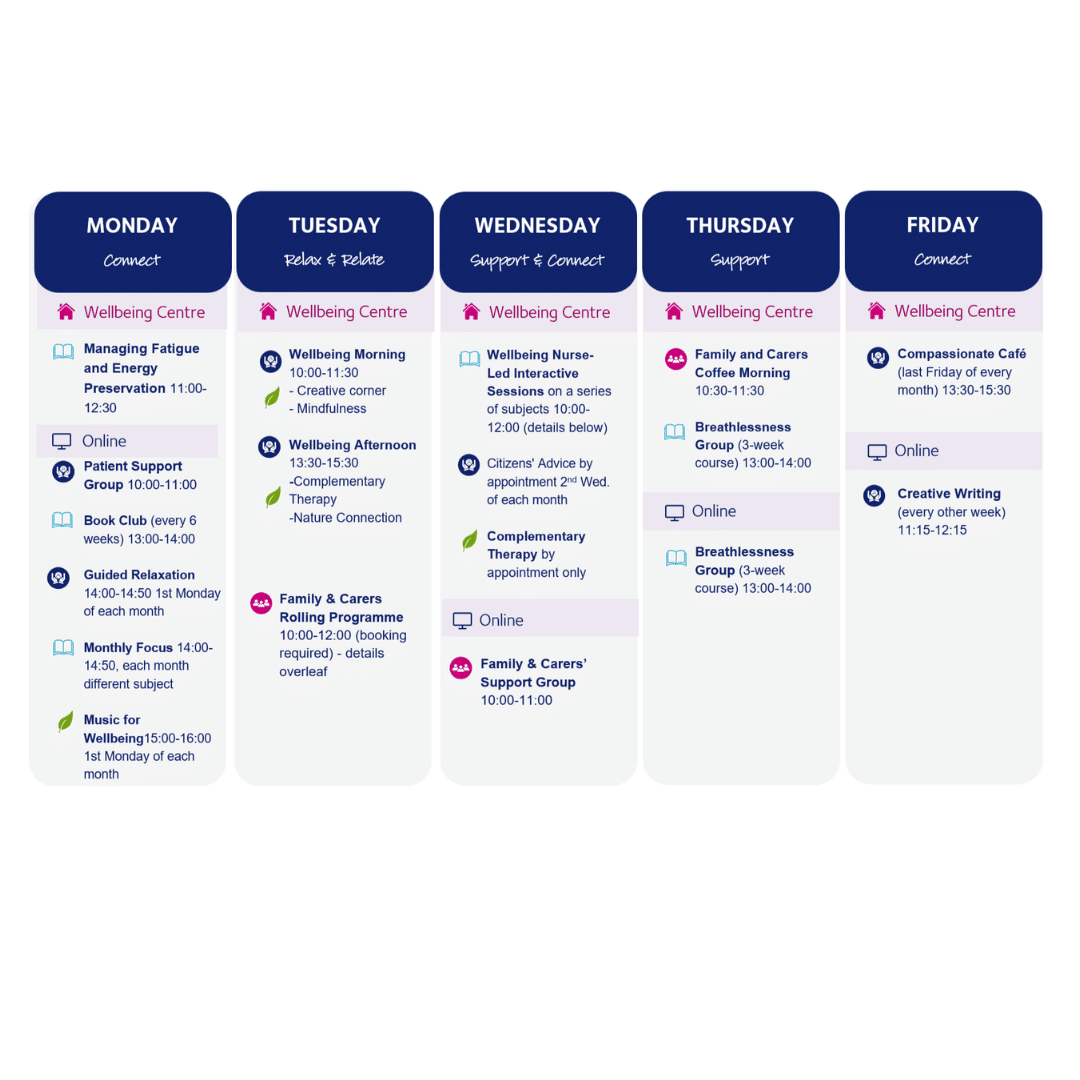
Our Weekly Sessions
| Monday | Tuesday | Wednesday | Thursday | Friday |
| Wellbeing Centre Managing Fatigue and Energy Preservation (3 week course) 11:00-12:30 | Wellbeing Centre Wellbeing Social Morning 10:00-11:30 | Wellbeing Centre Nurse-Led Interactive Sessions on a series of subjects 10:00-12:00 | Wellbeing Centre Family & Carers' Coffee Morning 10:30-11:30 | Wellbeing Centre Compassionate Café (Last Friday of every month) |
| Online Patient Support Group 10:00-11:00 | Wellbeing Centre Family & Carers Rolling Programme 10:00-12:00 (booking required) | Wellbeing Centre Citizens Advice by Appointment - 2nd Wed. of each month | Wellbeing Centre Breathlessness Group (3 week course) 13:00-14:00 | Online Creative Writing (every other week) 11:15-12:15 |
| Online Book Club (every 6 weeks) 13:00-14:00 | Wellbeing Centre Complementary Therapy - By appointment only | Online Breathlessness Group (3 week course) 13:00-14:00 | ||
| Online Guided Relaxation 14:00-14:50 (1st Monday of each month) | Online Family & Carers Support Group 10:00-11:00 | |||
| Online Monthly Focus 14:00-14:50, each month different subject | ||||
| Online Music for Wellbeing 15:00-16:00, 1st Monday of each month |
-
Our Wellbeing Breathlessness Programme is designed to help you understand and manage your breathlessness more effectively, enabling you to feel more confident and in control of your symptoms. The programme focuses on understanding the experience of breathlessness and explores practical ways to reduce its impact on your daily life. This includes breathing techniques and pacing strategies that can help ease episodes of breathlessness, as well as advice on energy conservation, positioning, relaxation, and managing everyday activities.
We also recognise that breathlessness can affect more than just physical health. Feelings of anxiety, worry, or loss of confidence can sometimes make symptoms feel worse. The programme therefore explores the relationship between breathlessness, thoughts, emotions, and activity levels, helping you to develop effective coping strategies and improve your overall wellbeing.
The programme consists of three sessions delivered by experienced members of our multidisciplinary team, including a nurse, physiotherapist, and occupational therapist. Each professional brings specialist knowledge and practical advice to support you in managing your symptoms and maintaining independence. Sessions can be attended either in person at the Wellbeing Centre or online from the comfort of your own home, providing flexibility to suit your needs.
-
Being a carer can be positive and rewarding, but at the same time you need some time for yourself. These sessions provide you with the opportunity to meet with others in a similar situation, gain support and share experiences and advice.
We have face to face sessions with our Wellbeing Team for anyone caring for a loved-one. Our rolling programme of sessions covers:
- Being a Carer, An opportunity to meet other people caring for a loved one and to talk with our experienced staff
- Eating well – you and the person you are caring for, A session about what to expect when preparing meals for the person you care for and look at ways to encourage them to eat as well as possible. Also to ensure you are eating well yourself – we can share some ideas.
- Looking after your physical health – moving and handling people who are unwell, An opportunity to ensure you are looking after yourself physically and learn techniques on moving your loved one without harming yourself.
- Managing your emotions and anxieties, A session looking at relaxation for yourself, and ensuring you make some time to care for your own emotional wellbeing whilst looking after your loved one.
- What to expect as your loved one becomes less well, With our experienced nursing staff, explore what to expect as the person you care for becomes less well. What are the signs you are looking out for, how to help them as they reach the last stages of life.
- Looking ahead, making plans, An opportunity to look at future wishes and how to ensure you have the conversations that will help to cover all the issues relating to end of life arrangements, how to record them and make sure that people who need to know are aware of the documentation.
Read about Chris, one carer who has joined our Wellbeing sessions alongside his partner Sue, and found them to be beneficial.
-
Complementary Therapies are treatments used alongside regular medical care, and especially helpful in palliative and end of life care. These therapies include massage, aromatherapy, reflexology, and reiki. They are not meant to replace medical treatment, but can help people feel better in other ways, by reducing stress, encouraging relaxation, easing pain, and support emotional wellbeing. Before starting any Complementary Therapy, a Complementary Therapist will talk to the patient about their needs and explain what the therapy involves. Consent is always obtained, and therapies are tailored to each person’s wishes and comfort. The main aim is to support the person’s quality of life and provide comfort, alongside their usual medical care.
Aromatherapy
Aromatherapy uses natural oils from plants, such as flowers, leaves, and roots. These oils are either inhaled or applied to the skin. They are designed to help you relax, improve your mood, and support emotional comfort.
Facial Acupressure
This is similar to acupuncture but without needles. Gentle pressure is applied to points on the face to help relieve discomfort, nausea, or anxiety.
Indian Head Massage
This treatment focuses on the upper back, shoulders, neck, scalp, and face. It can help relieve tension, clear a heavy feeling in the head, and promote calmness.
Manual Lymphatic Drainage
This is a very light, gentle massage that helps move fluid around the body. It can reduce swelling and puffiness, especially in the arms, face, or neck.
Massage
Massage uses gentle, flowing strokes to warm up your muscles and help you relax. It can ease tension and provide comfort through calm, supportive touch. We use effleurage, a massage technique involving long, gliding strokes at the start and end of sessions. This helps us identify areas of tension in your body.
M Technique
The M Technique is a gentle, structured method of touch that uses a series of slow, repetitive movements performed in a set sequence. Designed for individuals who may be fragile, anxious, experiencing pain, or unable to tolerate traditional massage, it can promote deep relaxation and a sense of wellbeing.
Reflexology
Reflexology is a specialised foot (or sometimes hand) massage. It is based on the idea that different areas of the feet connect to other parts of the body. Gentle pressure is applied to these areas to help you feel more balanced and relaxed.
Reiki
Reiki is a calm and relaxing therapy where hands are placed lightly on or just above the body. There is no pressure or movement. It can help you feel peaceful and deeply relaxed.
-
This online group meets every two weeks. We use poems to inspire our own writing, which we then share with the group. You might choose to write about memories, feelings or to simply enjoy putting words on the page.
-
Our Support Group provides an opportunity for patients to connect with others who may be facing similar experiences and challenges. Meeting with people who understand what you are going through can help reduce feelings of isolation and provide reassurance, encouragement, and a sense of community.
These small groups offer a welcoming, safe, and supportive environment where participants can talk openly about the issues that matter most to them. Discussions are shaped by the interests and needs of the group and may cover a wide range of topics, including coping with symptoms, emotional wellbeing, relationships, practical concerns, and maintaining quality of life.
There is no pressure to speak if you do not wish to. Some people find comfort in sharing their experiences, while others prefer simply to listen and learn from others. Whatever your preference, everyone is treated with respect and understanding. The aim of these groups is to provide mutual support, encourage meaningful connections, and help participants feel empowered and less alone
-
Guided Relaxation is a gentle and accessible wellbeing activity that uses soothing music, calming imagery, and relaxation techniques to help quiet the mind and relax the body. When calming sounds and guided relaxation techniques encourage the brain to slow down, the body’s natural relaxation response can be activated, helping to reduce feelings of tension and stress.
This practice offers a range of benefits, including reducing stress and anxiety, promoting positive thinking, improving emotional wellbeing, and encouraging a greater sense of calm and balance. It can also provide an opportunity to take time out from the challenges of daily life and focus on personal wellbeing. Guided Relaxation is suitable for people of all ages and abilities and is particularly welcoming for beginners, with no previous experience required.
Sessions are designed to be comfortable, supportive, and easy to follow. Regular relaxation practice can be an effective way to help manage a variety of symptoms, including pain, fatigue, nausea, breathlessness, and sleep difficulties. Many people find that it helps them feel more rested, improves their ability to cope with symptoms, and enhances their overall quality of life.
-
Living Well
Week 1 - Welcome & Support at Princess Alice Hospice
Adapting to change when living with a life limiting illness. How the Hospice can provide support, guidance, and assistance .Week 2 - Staying Active
The benefits of physical exercise, despite limitations. Includes a short armchair exercise session.Focused Sessions
Week 3 - Pain Management
An overview of medications and other strategies to manage pain effectively .Week 4 - Exploring the Impact of Illness
Looking at strategies to manage negative emotions, ‘’cutting out the noise’’ to cope with anxiety, and an opportunity to explore what works for you. (You will have the opportunity to discuss any other symptoms with the nurses )Planning Ahead
Week 5 - Benefits & Care Options
General information on benefits you may be entitled to, and how to access social or nursing care, at home or elsewhere .Week 6 - Planning Ahead
Introducing ‘Advanced Care Planning’ documentation, which may help with difficult decisions & discussions about your future .Week 7 – A Chance to Reflect
An opportunity to reflect on how illness might affect your outlook on life and your connections with the world around you . -
Music has a unique ability to bring back memories, evoke emotions, and connect us with important moments in our lives. Our Music Group offers a friendly and supportive space to share meaningful songs and the stories behind them. Using a different theme each week, participants explore music that has personal significance, helping to create a playlist of special songs that reflect your life experiences. Sessions take place in a small group via Zoom, encouraging connection, reminiscence, and enjoyment through the shared experience of music.
-
Sessions with a member of the clinical team, giving you the opportunity to discuss any worries or ask any questions, which are more personal.
-
This is a chair-based yoga group, that will include movement, yogic breathing and meditation using a variety of techniques to help the mind to settle. This session with gentle poses will help you to reduce your anxiety. Yoga can be practiced at any age and can be performed almost anywhere. The aim is to relieve you from symptoms, pain, physical difficulties, mental stress of illness, and improved quality of life.
Frequently asked questions
-
Our Wellbeing Sessions provide practical, emotional and social support to help you live as well as possible. They offer opportunities to connect with others, access therapies, learn new skills and receive support from our experienced team.
-
The focus of our Wellbeing Centre is supporting people with life-limiting illnesses to live as fully and independently as possible. Our sessions help patients to build their confidence and gain control of their lives, as well as supporting them to manage their symptoms. We are also here for family members and friends as well as anyone else who might benefit from our expertise.
-
The Wellbeing Sessions are aimed for people with a life limiting illness and their loved ones.
-
The Wellbeing Centre offers a range of services designed to support your physical, emotional and psychological wellbeing. Whether you are looking for relaxation, information, practical advice or social connection, we can help you find the support that’s right for you.
-
If you would like to learn more about our wellbeing services or book a session, please contact the Wellbeing Centre team, who will be happy to discuss your needs and answer any questions.
-
You do not always need a referral to access our Wellbeing Services. You can self-refer using the referral form provided at the top of this page. Alternatively, you can speak to your healthcare professional or contact the Wellbeing Centre directly to discuss whether our services are suitable for you. Our team will be happy to guide you through the process and answer any questions you may have.
-
When you attend for the first time, a member of the team will welcome you, explain what is available and help you choose activities or services that meet your needs. There is no pressure to join in more than you feel comfortable with.
-
We offer complementary therapies such as aromatherapy, reflexology, massage, reiki and relaxation techniques to help manage symptoms and improve wellbeing.
-
We encourage people to give it a try. Everyone is very friendly and inclusive. Patients welcome each other even if they haven’t met before. Sometimes patients who feel low get a nice boost after joining these sessions.
-
All you need to be able to join the session is three things.
- You need access to the Internet
- You need a device with camera, speakers and microphone. This can be, a laptop, tablet, PC with camera and microphone, or a smartphone
- You will be sent an email link to the meeting which will automatically start zoom with the meeting ID box populated
-
Yes! We run various sessions, including yoga, seated exercise, creative writing, mindfulness, and music.
-
You can join the relaxation sessions, the art, or the carers’ group.
Read about Chris, one carer who has joined our sessions alongside his partner Sue and found them beneficial.
-
Absolutely. We offer individual sessions with nurses and therapists to provide tailored support.
-
Of course they are welcome can join you. They can also join any of the other relevant sessions to them such as relaxation sessions, yoga, exercise, art or carers’ groups.
-
All of our sessions are free of charge.


We provide a complete package of care for patients, carers and families
“It has certainly changed my life for the better. I feel 100% different to what I felt when it was first suggested that I attend Princess Alice Hospice. The feeling of compassion and love surrounds me. I have nicknamed it the Smiling Palace – you are greeted, listened to, and helped in a gentle, compassionate manner which relaxes and restores my faith in humanity. Compassion is the word, and love. I think love is the most powerful thing in the world.”
- Derek


