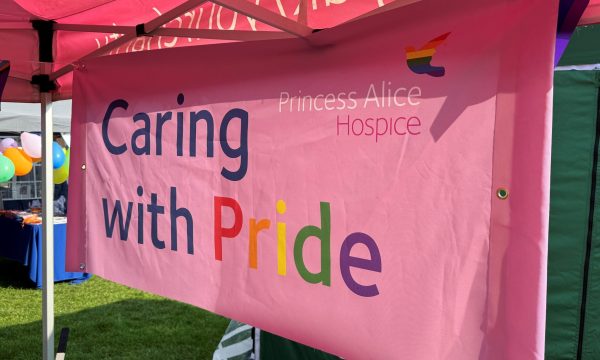
Your Pride questions answered
What does LGBTQ+ stand for?
Common question! L stands for lesbian, G stands for gay, B stands for bisexual, Q stands for queer, and + is to include all gender identity and sexual orientation variants, such as pansexuality or being non-binary.
I thought ‘queer’ was an offensive term?
The term ‘queer’ has a history of homophobic usage and bigotry. It has been used as a slur towards people who do not identify as heterosexual or as the gender they were assigned at birth. However, many individuals find the term queer a useful term for self-identification. In this context, the term queer is an umbrella term encompassing a variety of non-heteronormative identities and sexualities.
It can be useful for people who don’t feel straight, or don’t feel the gender they were assigned at birth, but haven’t found a term for their specific orientation or gender, as everyone’s experience of sexual orientation and gender is unique and different.
It’s important to only use this term to self-identify and never to refer to someone else as ‘queer’ without their specific consent due to the legacy of the term.
What are gender identities?
Gender identity is a person’s sense of self in relation to their experiences with masculinity and femininity. It can relate to how a person wishes to dress, to more personal matters such as their comfort level with their anatomy.
What is being ‘non-binary’?
Non-binary people are people who don’t feel as though they fit into one category when it comes to gender.
They may fluctuate between femininity and masculinity on a day to day basis, or they may feel that masculinity and femininity are not relevant categories to apply to their lived experience.
Or none of this may be true and they may feel their relationship with gender in a unique way that the binary between masculine/feminine or man/woman couldn’t encompass.
Is being non-binary the same as being transgender?
For many people, being non-binary falls under the umbrella of being trans. Being trans is an encompassing term for people whose gender differs from the gender they were assigned at birth.
Transwomen are women who were assigned male at birth but have since discovered they are actually women. Transmen are men who were assigned female at birth but have since discovered they are actually men.
How do I know if someone is, for example, a transman or a cis man or non-binary?
You don’t! And in most cases, it’s no one’s business except that of the individual. Unless you’re a doctor who needs to know for medical reason whether someone is taking hormones, it is inappropriate to ask someone about their anatomy or personal gender experience.
The best thing to do is to ask if someone feels comfortable sharing their pronouns, and if they are, then use the pronouns they tell you and don’t worry about anything else.
If they do share with you more information, great! If not, that’s also fine. It’s up to them.
What is being intersex?
Being intersex is a natural variation that occurs in around 2% of the population. It means that when you were born, your anatomy or chromosome presentation did not fit into the male/female binary, making it difficult or not valid for doctors to assign you as distinctly either male or female.
Often, parents and doctors simply pick a gender as choose to raise the baby as though they do fit into the male/female binary. This can present identity problems and confusion for the child growing up and there is a movement arguing that intersex people should decide for themselves when they’re old enough whether they want surgery or medical intervention to assign them as one side of the gender binary, or whether they are happy as they are.
What is being cisgender?
Being cisgender means that the gender identity you have is the same as the sex you were assigned at birth. So, if when you were born the doctor said you were a girl, you would still identify as a girl or woman.
What is asexuality?
Asexuals are people who aren’t particularly interested in romance or sexual activity. Some asexuals are interested in romance without sex, while some aren’t interested in any sort of romantic connection. Around 1% of the population identify as asexual.
What is pansexuality?
Being pansexual means that your attraction to people is not a result of their gender.
Some pansexuals refer to themselves as ‘gender-blind’, and their attraction to people is based more on personality or ‘soul’ rather than anything to do with their body or gender expression.
What’s the difference between pansexuality and bisexuality?
Bisexual means you’re attracted to two genders, pansexual means your attraction is nothing to do with gender.
Bisexuals could be attracted only to men and women, or only to women and non-binary people, but they still have two genders they find attractive and some genders they don’t find attractive.
Why is this relevant for me to learn about? What does this have to do with hospice care?
At Princess Alice Hospice, we believe that everyone deserves compassion, respect, and a good end of life. It remains true that hospices tend to underserve different parts of their local communities, such as LGBTQ+ people, people of colour or those from low-income backgrounds.
To ensure that we can serve these communities in the best possible way, it’s important for us to be able to support people if they share with us gender identity or orientation and make them feel safe and comfortable no matter their background.
Knowing and understanding terms and checking the assumptions we have will help people feel comfortable, and help us engage effectively in their end of life plans. For example, by making sure that the name we use is correct, or making sure their partner is recognised and supported when visiting.
This will help ensure everyone gets the caring, compassionate, and high-quality end of life that we all deserve.