Helping patients breathe more easily
Breathlessness in palliative and end of life care affects different people in different ways depending on their condition. It is often an alarming and worrying symptom for both patients and their loved ones. At Princess Alice Hospice we hold sessions in our Wellbeing Centre to help people to cope with breathlessness and take back some control over their symptoms.
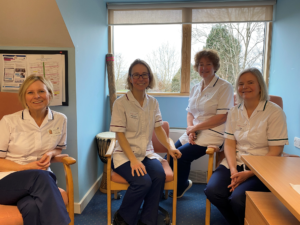
Rachel is a Senior Staff Nurse in our Wellbeing Centre and explains how the sessions help to alleviate the anxiety surrounding breathlessness:
‘We run three one-hour sessions on consecutive weeks where people who have been referred to us can come and learn some techniques to help deal with breathlessness. The sessions are run as a mix of face to face and online, led by Wellbeing Centre nurses who are joined by physiotherapists and occupational therapists for additional support when needed.’’
Rachel explains how the sessions are broken down as follows:
Week 1: the breathing cycle. Wellbeing Centre nurses are joined by our physiotherapist and in this session, we talk about breathing techniques. Often patients adopt unhelpful breathing as a way of coping, such as panting, which will only fill the top of the lungs with air. This session looks at techniques and strategies that will improve the pattern of breathing.
Week 2: the thinking cycle. This focuses on how people relate to their breathing. Some people might panic and become very anxious. We try to break the cycle of unhelpful thoughts and emotions which can exacerbate breathing difficulties. We encourage people to reframe thoughts and encourage positive thinking, such as: ‘I can get through this, this will help me breathe easier’. Patients learn how to recognise anxiety as a factor in their breathlessness and take steps to help themselves relax and take back control.
Week 3: the functioning cycle. Nurses are joined by our occupational therapist and this session is more about enabling people to continue to do activities they enjoy, within their limitations. We show how they can adapt what they’re doing, to work around symptoms of breathlessness and not give up activities they enjoy doing. Whether it’s gardening or simply going upstairs, there are ways to adapt the activity, allowing them to identify priorities and continue to do the things they love.
 Assessments are held at the beginning and end to measure the impact that sessions have had. Ultimately, although we cannot stop the progression of a disease, we can help patients to manage their symptoms with confidence.


